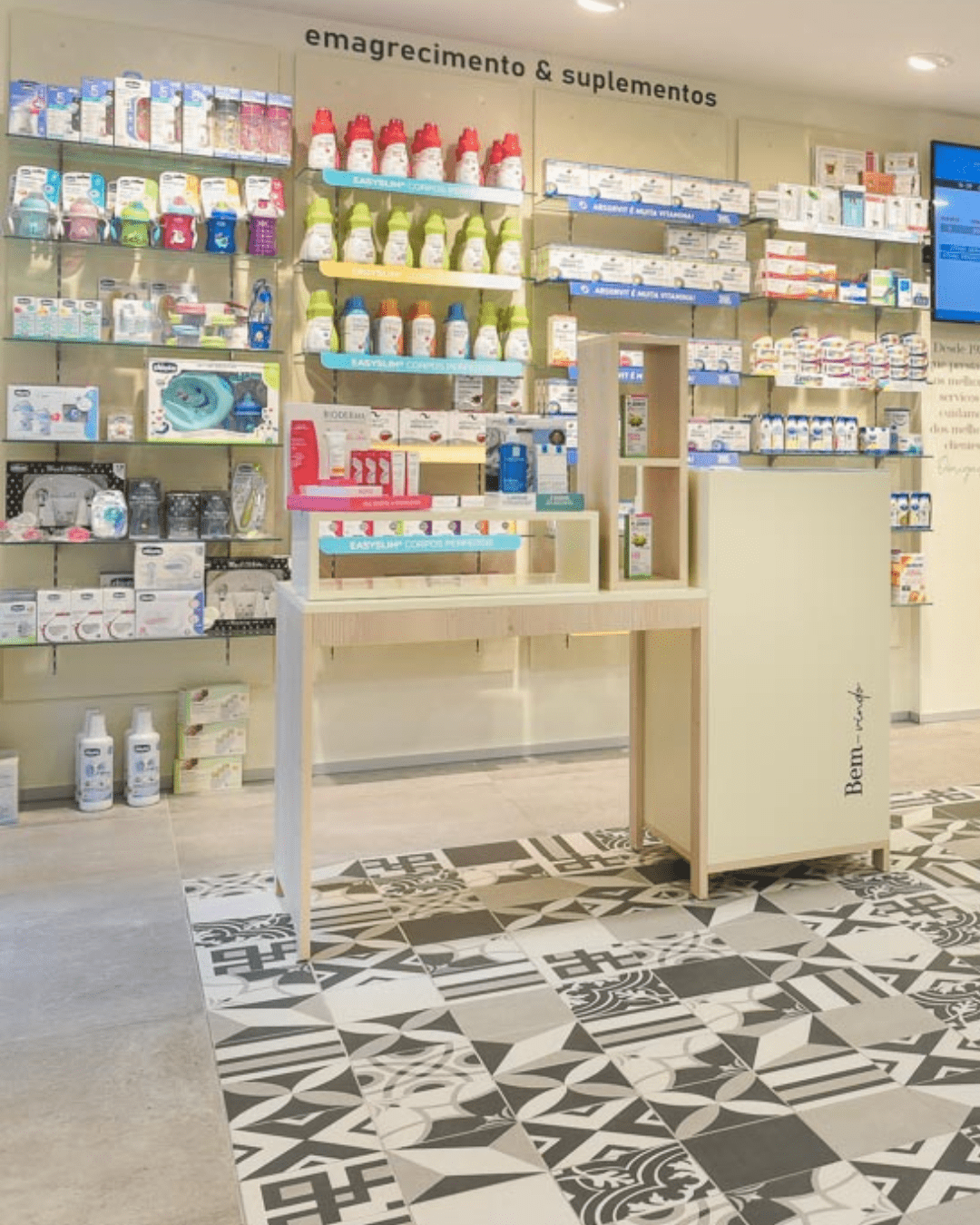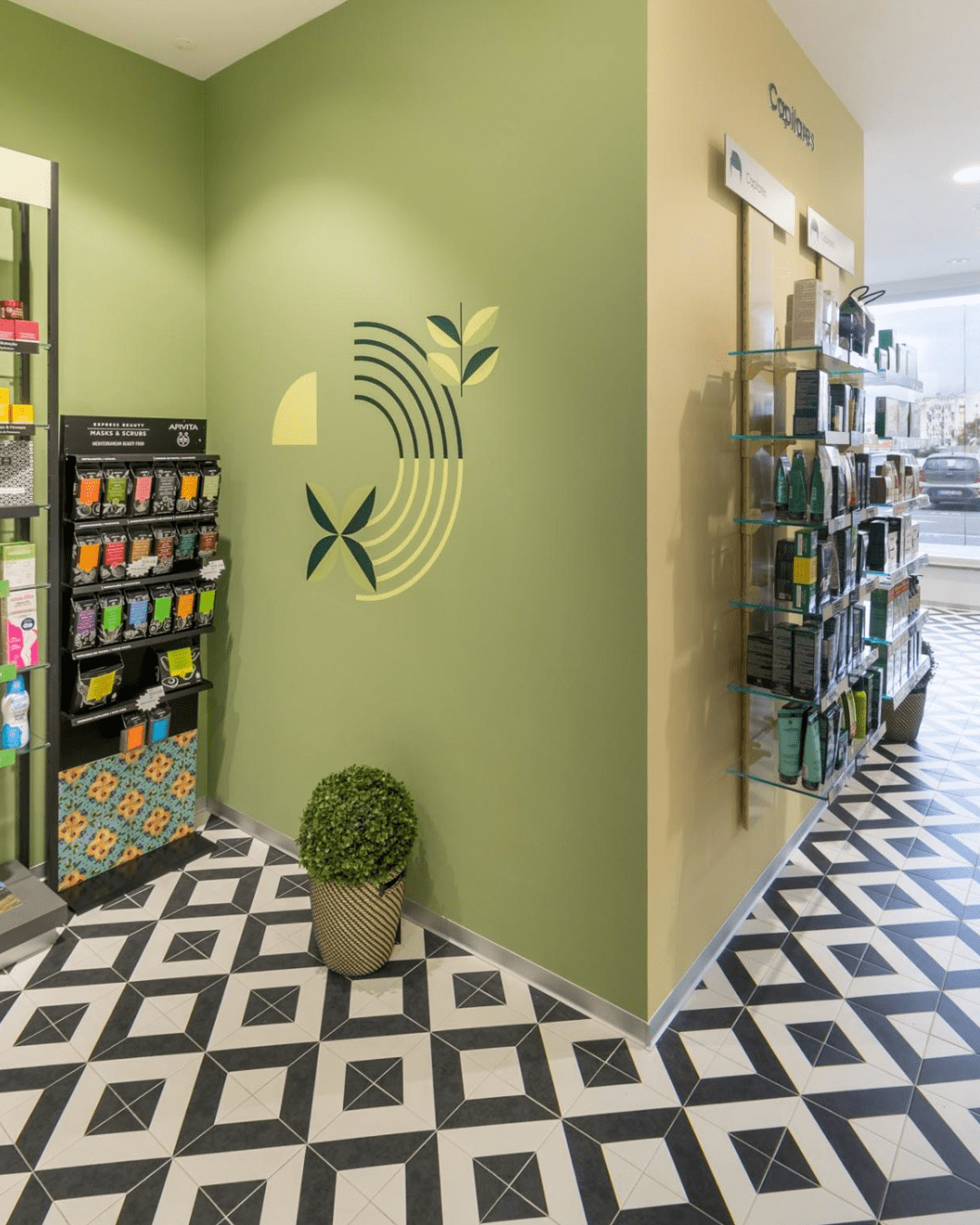


How ceramic specification shapes spatial organisation, reinforces identity and ensures long term performance in healthcare environments.
In pharmacy architecture, ceramic tiles should not be viewed as a mere finish. They are a technical component with direct impact on spatial clarity, operational efficiency and lifecycle performance.
When strategically specified, tiles move beyond surface treatment and become part of the visual and functional structure of the space. Their application influences light control, perception of hygiene, user flow and brand positioning.
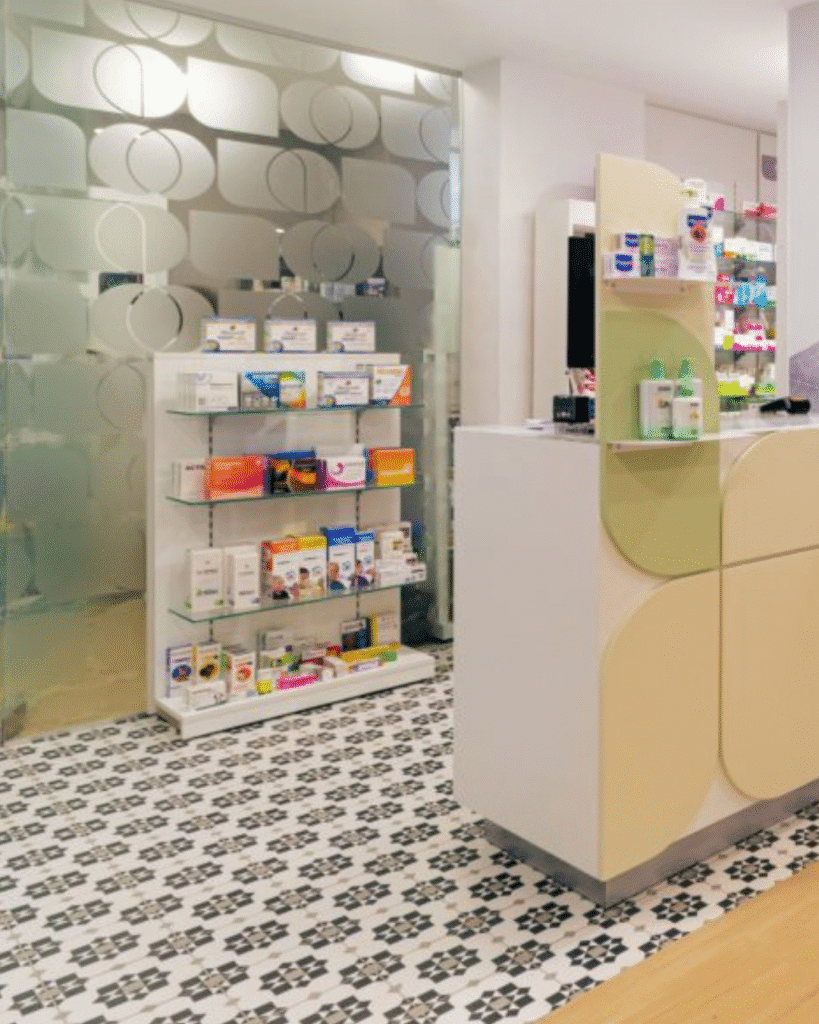
Back wall at the counter or floor plane
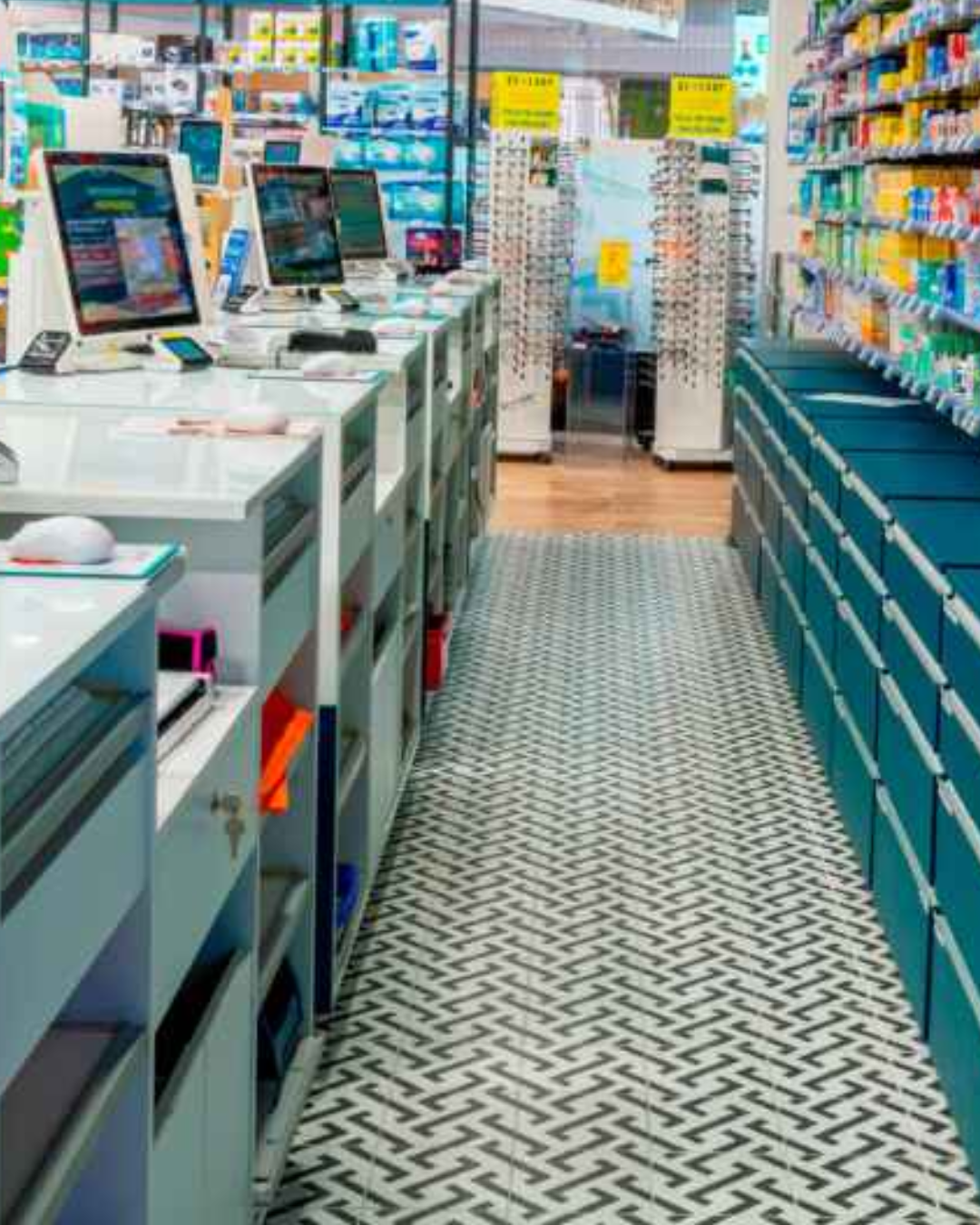
In the dispensing and service area, tiles can function as a continuous stabilising plane. Monochromatic surfaces with minimal joints and a satin finish enable controlled light reflection and a clean spatial reading.
This approach reinforces precision, order and hygiene, all critical factors in healthcare environments. The material does not compete for attention. It supports the operational framework.
Dermocosmetics and advisory areas
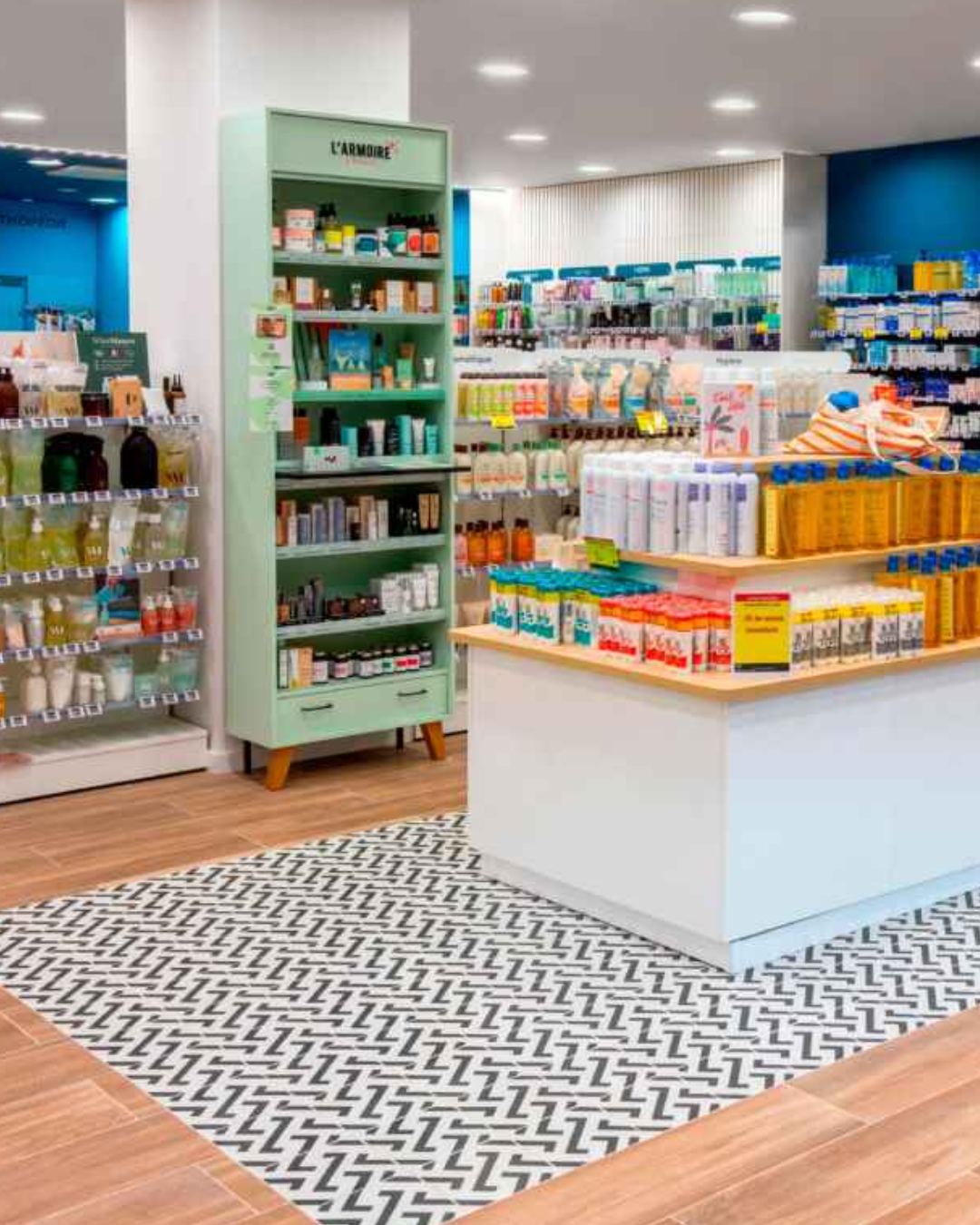
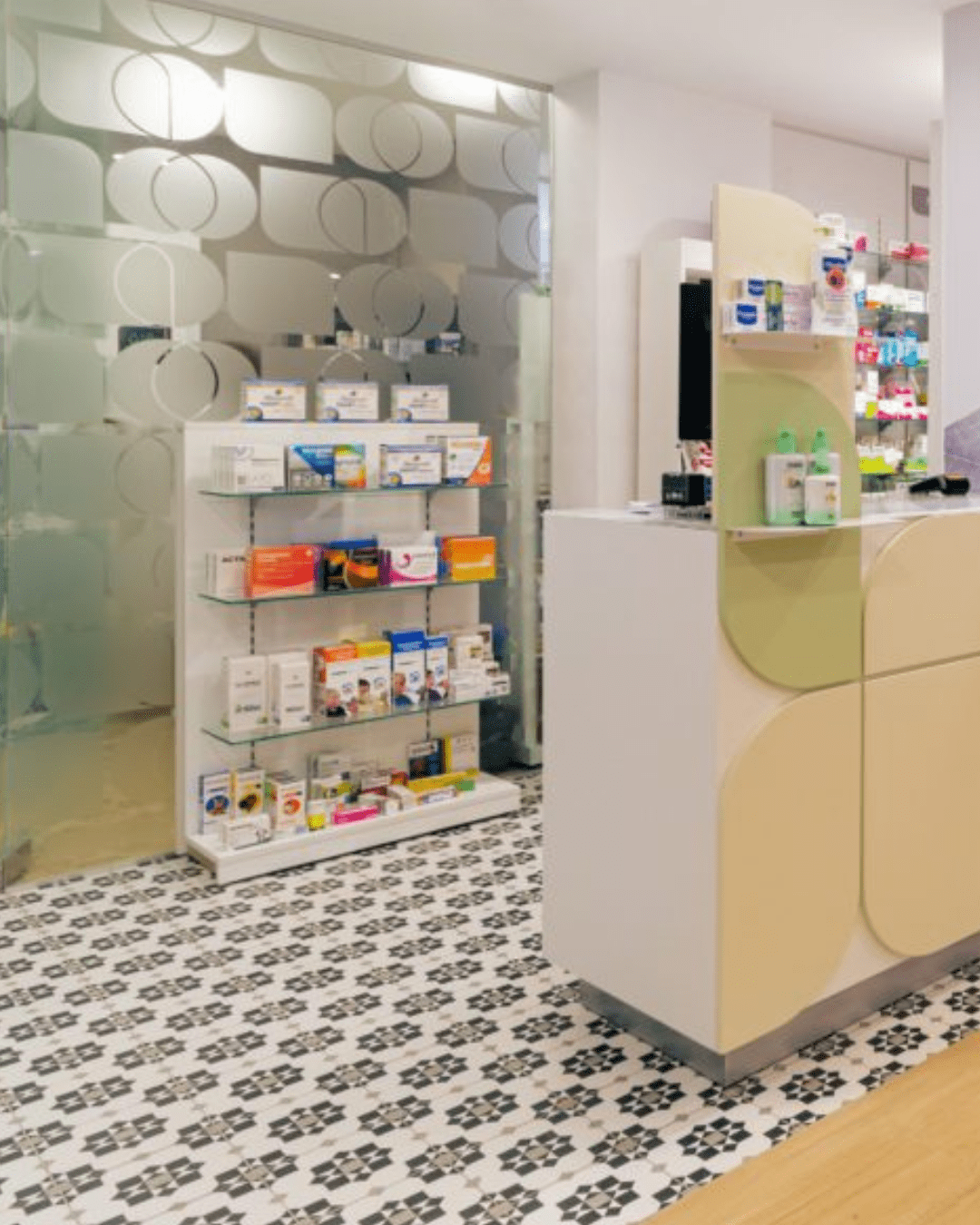
In zones designed for consultation and longer dwell time, ceramic tiles can introduce subtle differentiation through variation in format or pattern.
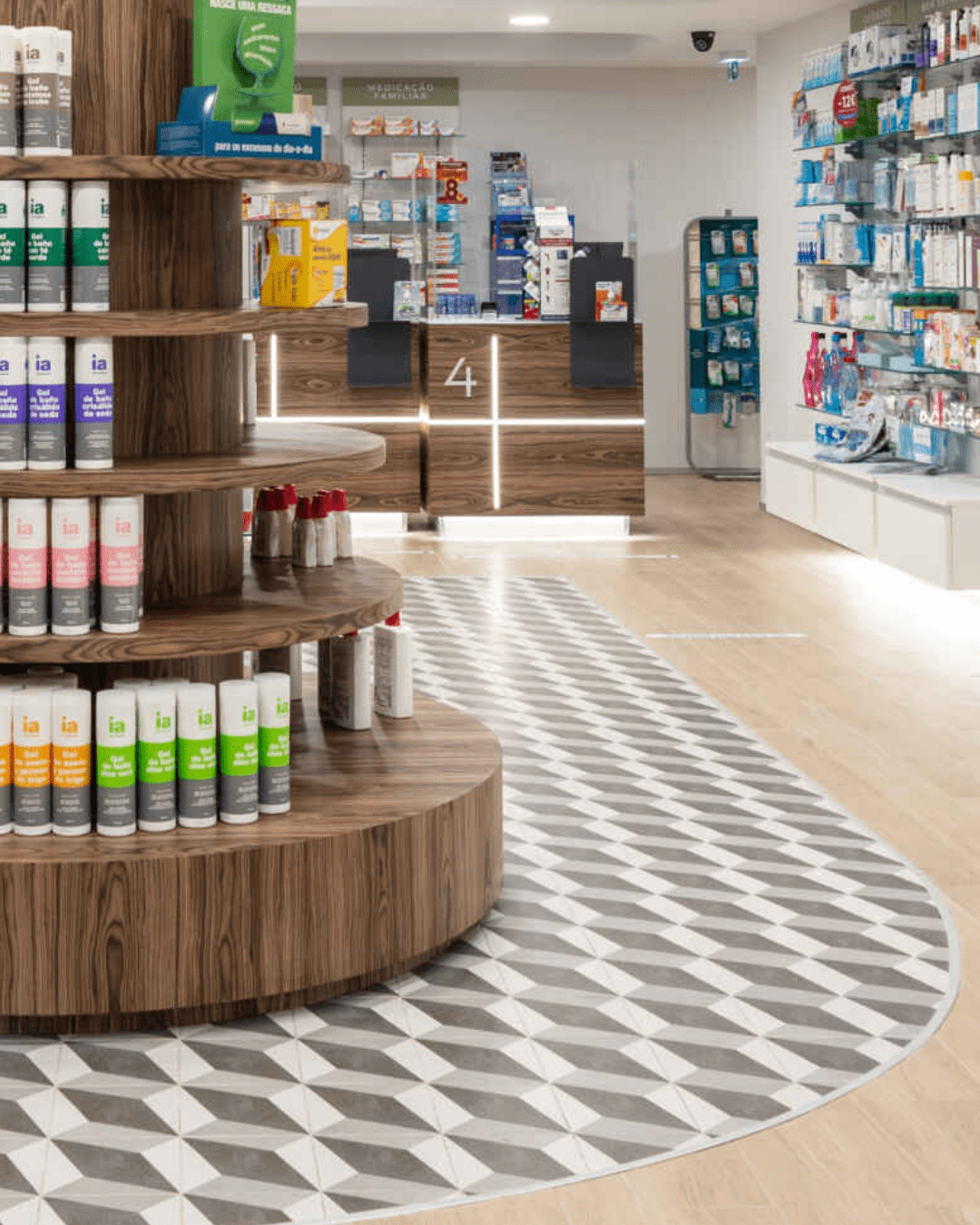
Smaller formats or discreet geometries allow area definition without physical partitions, maintaining spatial continuity. Here, the material acts as a transition element between the operational zone and the advisory environment, enhancing user experience without compromising coherence.
Laboratory and technical areas
In preparation and back of house areas, the decision is primarily technical. Smooth, durable, non porous and easy to clean surfaces ensure compliance, longevity and efficient maintenance.
Continuity between wall and worktop reduces critical junctions and supports hygiene control. The specification is functional but fully integrated into the
overall spatial composition.
Identity driven feature elements
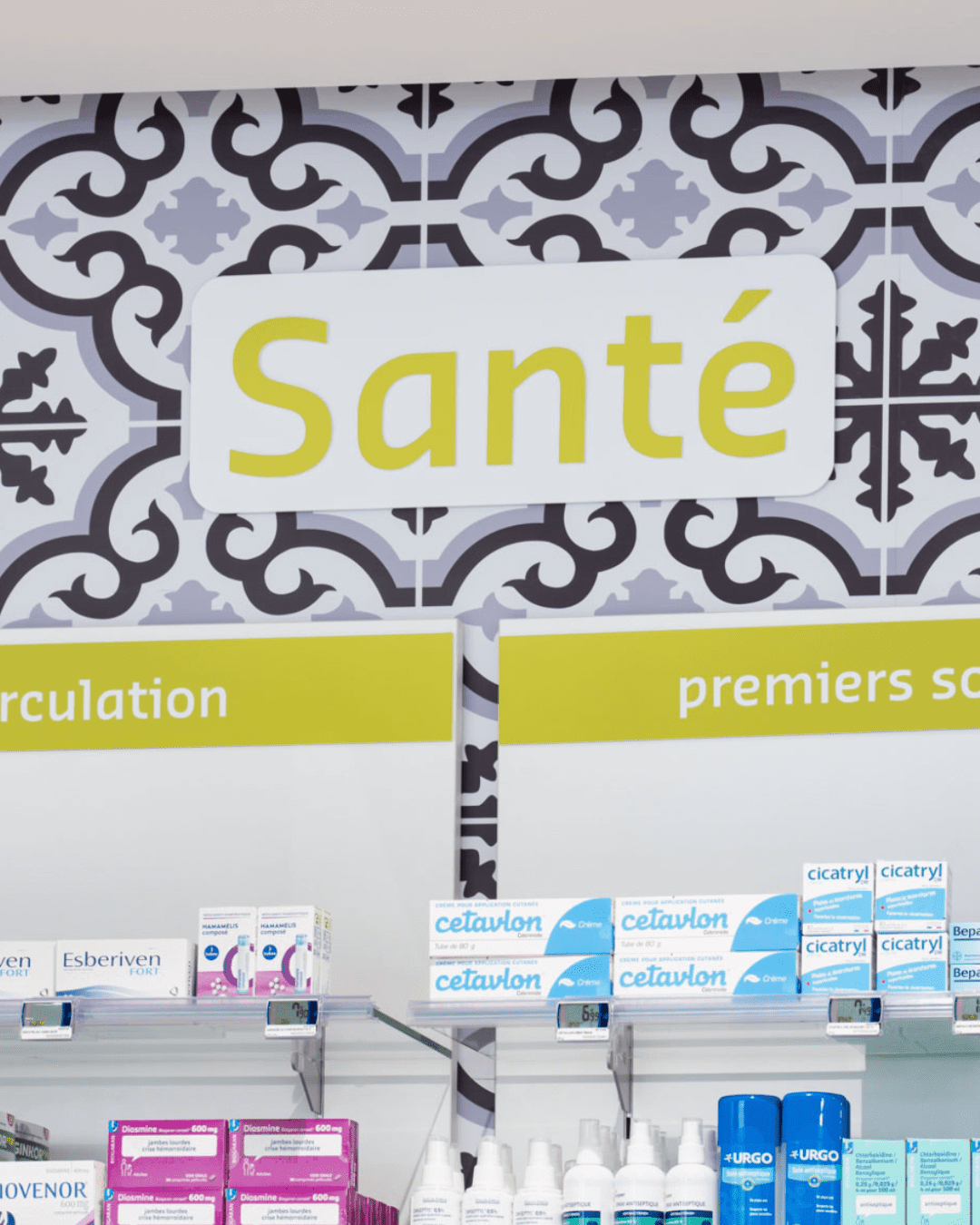
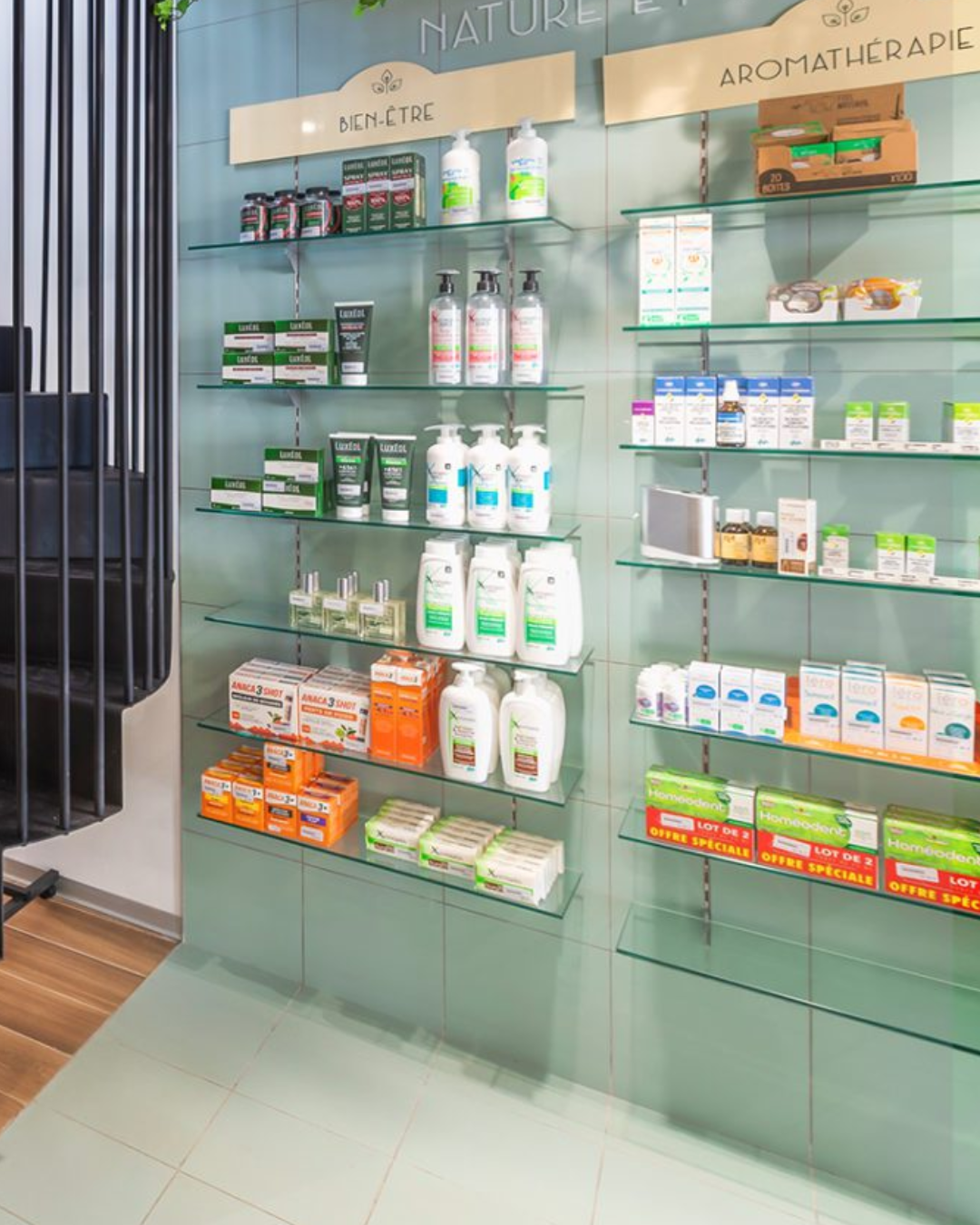
In selected projects, ceramic tiles can become a strategic identity component. Full height applications, defined colours or controlled patterns create visual memory and reinforce local positioning.
This is not decorative intent. It is spatial strategy aligned with brand and concept.
Circulation and spatial hierarchy
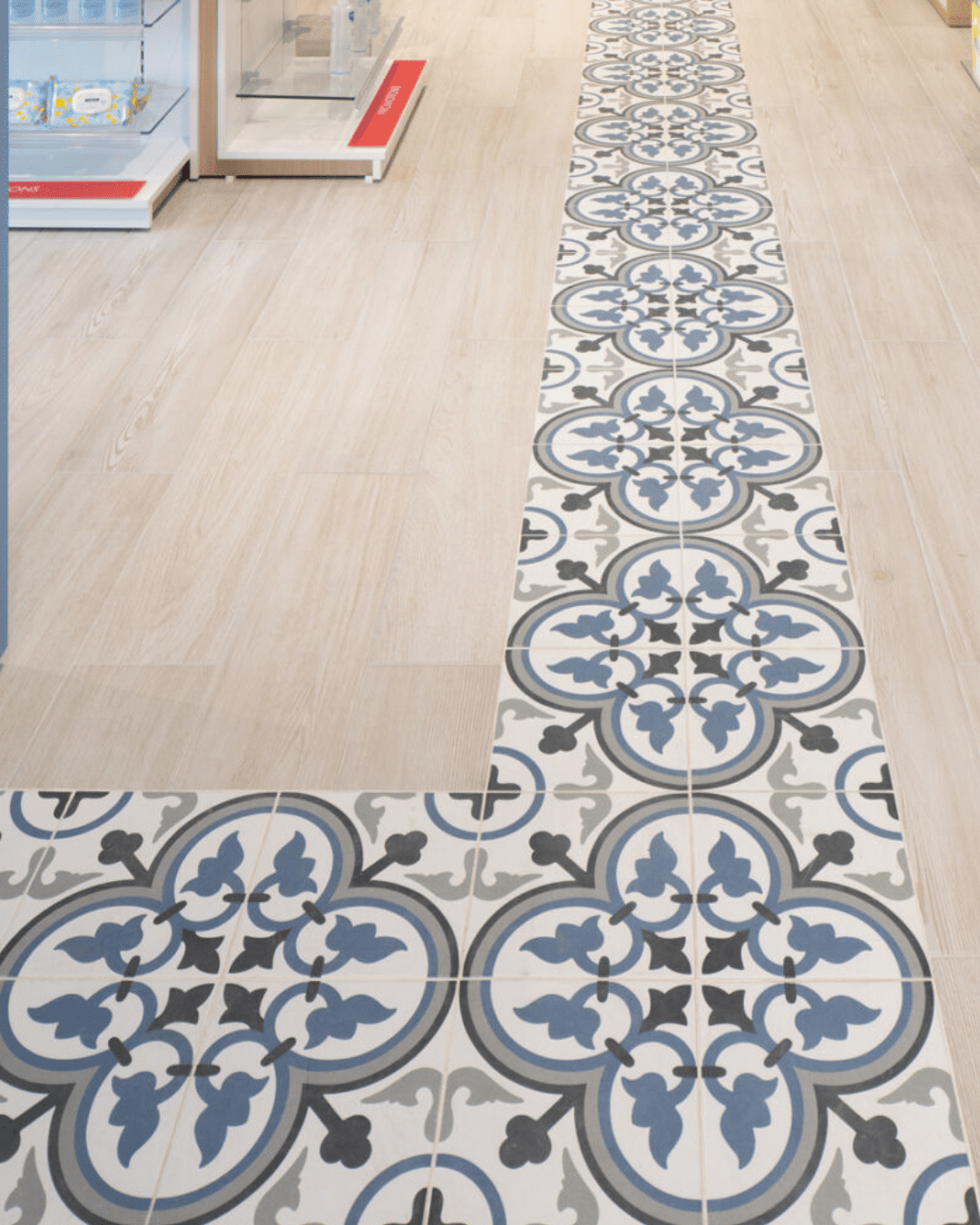
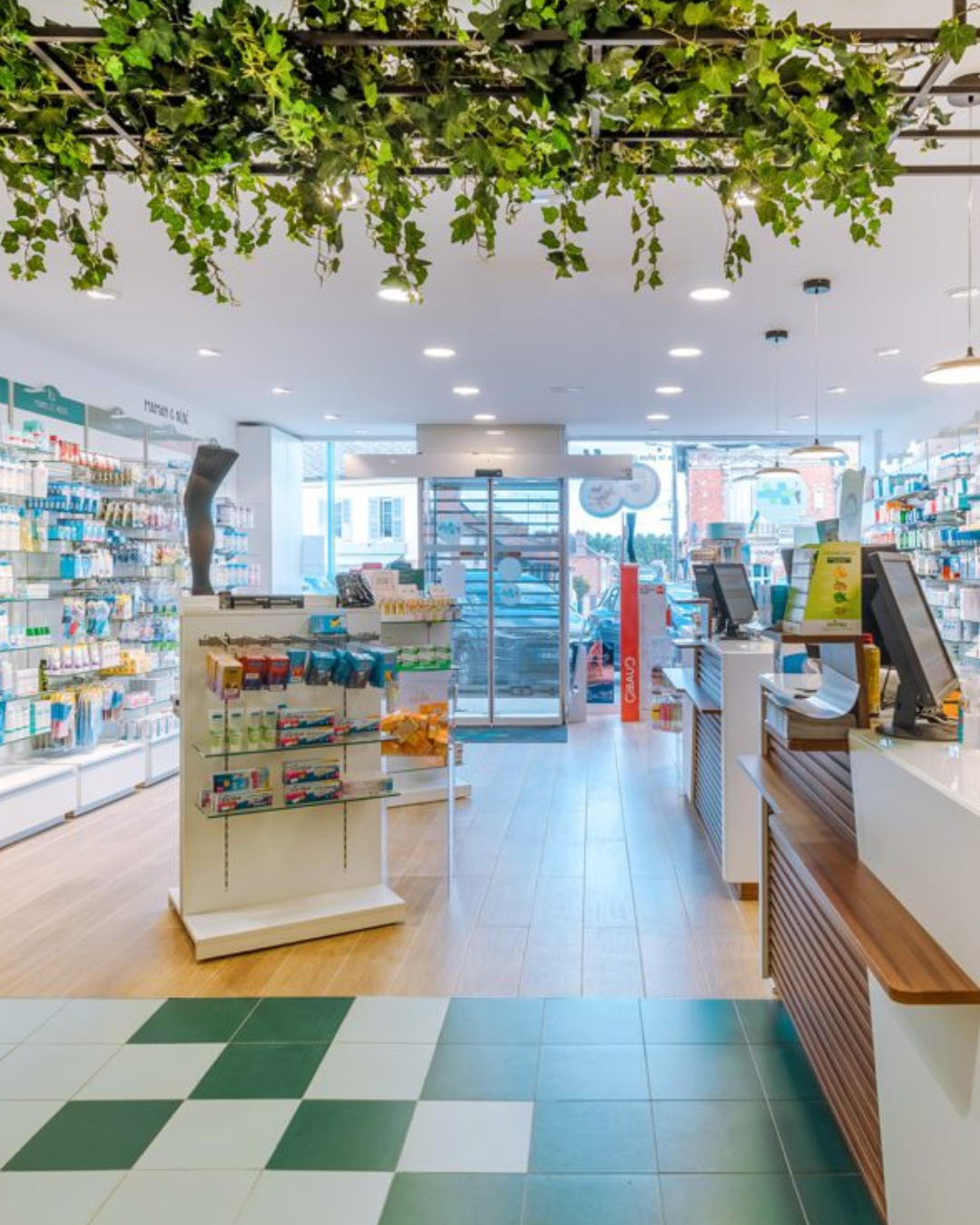
Tiles can also structure internal movement. Applied to strategic vertical planes or floor transitions, they define zones and create hierarchy without introducing physical barriers.
By varying format or tone, it is possible to mark transitions between service, dermocosmetics and technical areas while maintaining fluidity and clarity.
This versatility explains why ceramic tiles are specified in projects where functionality,
identity and durability must coexist.
Material selection also carries environmental responsibility. Durability and low maintenance requirements reduce replacement cycles and extend the lifecycle of the space, supporting sustainable construction principles.
Material is strategy.
In healthcare environments, strategy is performance.
Pharmacy Applications by Medd.